News analysis · Published
California SB 574 Is Law: Make Legal AI Verification Traceable
By the ELYMENT AI editorial team · Free to read
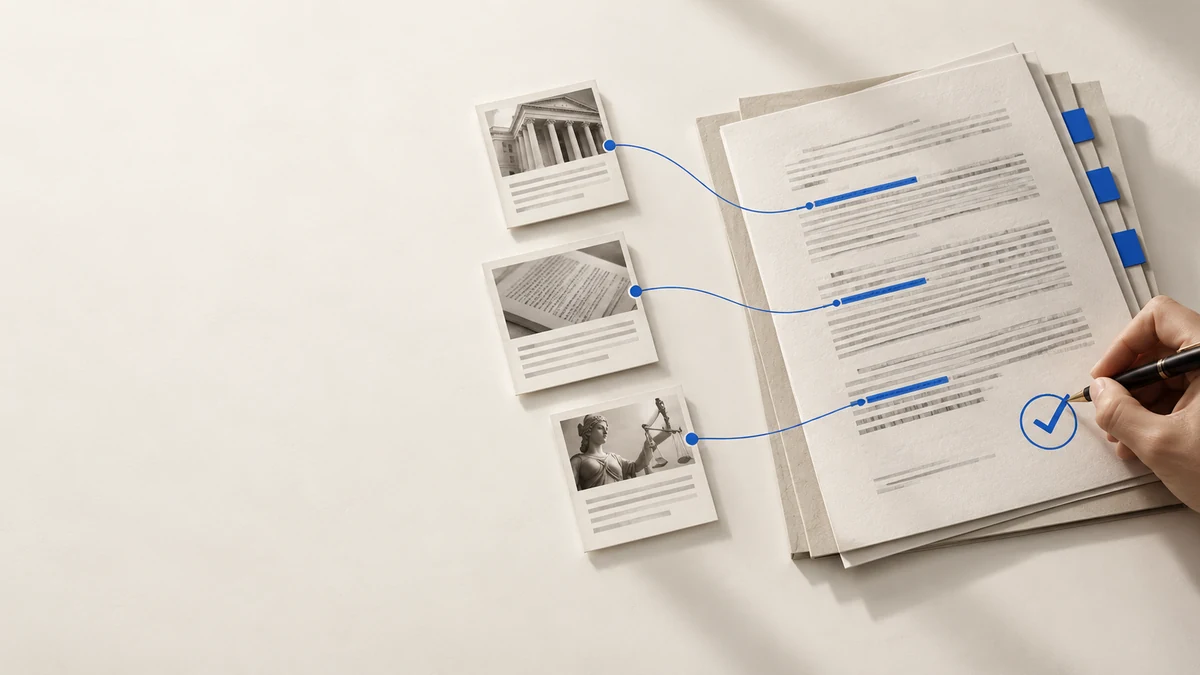
California Governor Gavin Newsom signed SB 574 on 30 September 2026, turning proposed legal AI rules into law. Attorneys using generative AI must take reasonable steps to verify outputs, correct errors, protect confidential and nonpublic information, disclose AI use in court submissions and personally verify citations. Legal teams should respond with a traceable verification record that connects each AI-assisted work product to its sources, reviewer, corrections, disclosure decision and final approval.
What changed when SB 574 became law
California lawmakers passed SB 574 on 31 August 2026, and ELYMENT AI analysed the proposal on 2 September. The material change is legal certainty: Governor Newsom signed the measure on 30 September as part of a broader package of AI-related laws. Reuters described it as the first state law specifically targeted at lawyers' and arbitrators' use of generative AI.
The enacted text does not ban legal AI. It keeps professional responsibility with the human practitioner. An attorney may use generative AI to assist legal work but cannot delegate the practice of law to it. That distinction turns AI governance from a general ethics statement into a work-product control.
The law makes verification personal and specific
SB 574 requires attorneys to take reasonable steps to verify AI outputs, including case and statutory citations, and to correct erroneous or hallucinated output in any material they use. For court filings, an attorney responsible for the submission must personally verify every citation, including citations supplied by generative AI. The law also requires disclosure of generative AI use for documents submitted to a court and says lawyers should consider disclosure for AI-created public content.
Confidentiality is equally operational. Attorneys must not enter confidential, personally identifying or other nonpublic information into a generative AI system unless access is restricted to the attorney and authorised people who are obliged to protect it. Arbitrators may not delegate any part of their decision-making process to generative AI or rely on AI-generated information outside the record without appropriate disclosure and an opportunity for parties to comment, as far as practical.
Build a legal AI verification record
A policy alone will not show that a filing, advice note or public statement was properly reviewed. Create a compact record for every material AI-assisted work product. Keep it with the matter file so the team can reconstruct what the tool contributed and what the responsible lawyer checked.
- Input boundary: classify the information before use and record why the selected system is approved for that data.
- Source trail: preserve the authorities and evidence used to validate every material factual or legal proposition.
- Citation check: record the responsible attorney's direct verification of the cited authority and its relevance.
- Correction log: note material AI errors, the correction made and whether related outputs were rechecked.
- Disclosure and approval: capture the court or public disclosure decision, final reviewer, date and approved version.
What legal and business leaders should do now
Map where generative AI touches research, drafting, document review, client communication, public content and arbitration. Then assign an accountable lawyer to each workflow, define approved systems and data classes, and make the verification record part of release rather than an optional afterthought. Test the process on a real but low-risk matter and measure the review burden before expanding it.
The State Bar of California's updated 2026 practical guidance remains useful for competence, confidentiality, communication and agentic AI, but the enacted statute should now be reflected in intake, matter management, document approval and court-filing controls. ELYMENT AI can help organisations turn legal AI requirements into governed workflows with visible evidence, human ownership and reliable release gates.
Sources
- California Legislature: Enrolled text of SB 574 (4 September 2026) - Official enrolled bill text covering attorney verification, confidentiality, disclosure, citation and arbitrator obligations.
- Governor of California: AI protections signed into law (30 September 2026) - Official confirmation that Governor Gavin Newsom signed SB 574 with California's wider AI legislative package.
- Reuters: California sets guardrails on lawyers' AI use (1 October 2026) - Independent reporting on the first-of-its-kind law and its practical effect on legal verification work.
- State Bar of California: Ethics and technology resources (Updated 2026) - Official professional guidance for responsible generative and agentic AI use in legal practice.
Continue learning
Related analysis
- California SB 574: What Legal AI Governance Should Include
California's SB 574 would set AI duties for lawyers and arbitrators. Professional firms should build verification, disclosure and data controls now.
Frequently asked questions
Does California SB 574 ban lawyers from using generative AI?
No. It permits AI assistance while keeping legal judgement and professional responsibility with the attorney, together with verification, confidentiality, correction and disclosure duties.
What must an attorney personally verify under SB 574?
An attorney responsible for a court submission must personally verify every citation in the filing, including citations provided by generative AI.
Can lawyers put confidential client information into an AI system?
Only when access to the information is restricted to the attorney and authorised people who are under obligations to protect its confidentiality.