News analysis · Published
RoboParty RP1: What Businesses Need From an Open Robotics Release
By the ELYMENT AI editorial team · Free to read
RoboParty's RP1 announcement offers a useful test for businesses exploring open robotics: can an outside team reproduce and maintain the system from what is actually published? The company's 3 October 2026 release describes a developer-focused humanoid unveiled at IROS on 28 September, with broader hardware and software releases planned later in Q4 (source 1). Treat that roadmap separately from the existing ROBOTO ORIGIN resources. Before committing budget, verify the available components, version compatibility, licence scope and maintenance responsibilities.
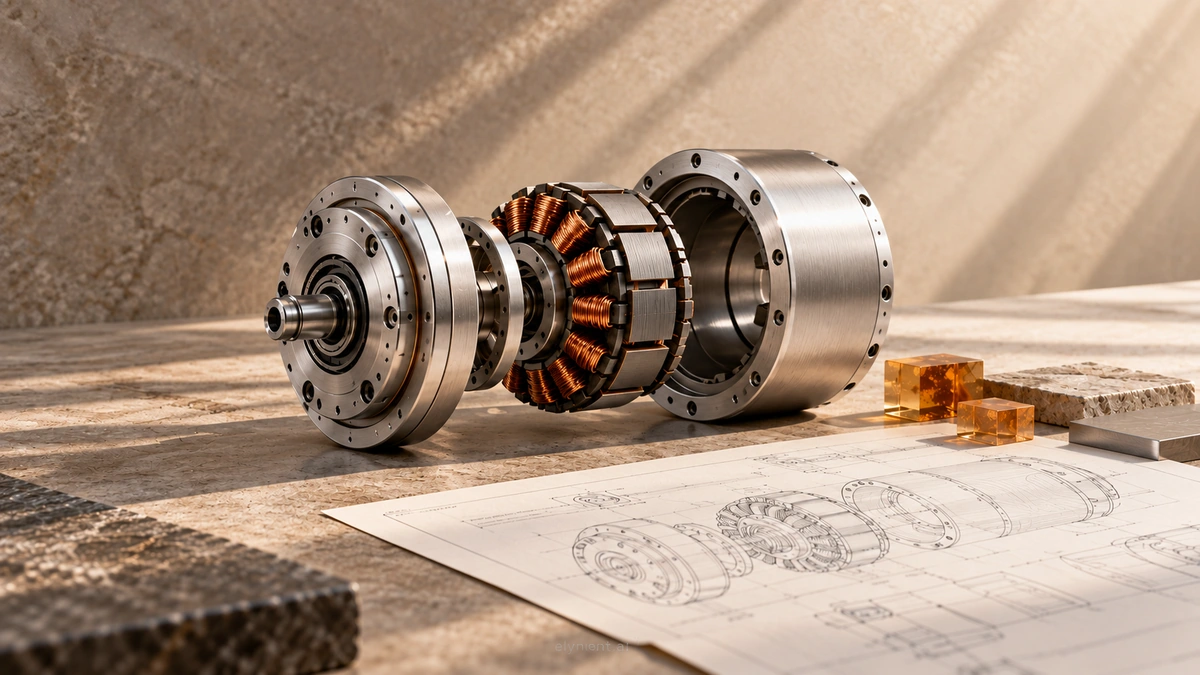
What RP1's announcement establishes
RoboParty positions RP1 as a platform for robotics researchers, educators and embodied-AI developers. Its announcement describes an integrated direction spanning the robot body, actuators, motion control and intelligent software. More roadmap details are due in October, followed by broader releases and a mass-production programme later in Q4. These are company plans, rather than evidence that every proposed component is available today (source 1).
For a business, the commercial opportunity is inspectable development infrastructure: a team might adapt components, investigate failures and build specialist experiments around a shared platform. That possibility deserves evaluation. It should not become an assumption that an exhibition demonstration can be reproduced independently or that a research platform is a supported production service.
Inventory today's resources separately from the roadmap
The official ROBOTO ORIGIN repository provides a concrete starting point. It aggregates predecessor resources covering hardware designs, deployment, training, simulation descriptions and firmware, with additional experimental modules. Its README explains that the repository is a snapshot aggregation and directs module-specific contributions to the individual repositories (source 2).
Create a component inventory for the proposed project. Mark each item as available, promised or supplied under a separate agreement. Record the repository, revision, hardware compatibility, dependencies and documentation needed to use it. Do not treat predecessor resources as proof that equivalent RP1 materials have been released.
Ask a team member who was not involved in the supplier demonstration to follow the published setup. Keep the resulting environment record and note every undocumented intervention. The useful output is a repeatable development starting point, including a clear list of missing resources and supplier dependencies.
Read licence scope at component level
ROBOTO ORIGIN's licence map says the root licence does not replace notices in modules, subdirectories or individual files. It distinguishes RoboParty-authored aggregation material from components with their own terms, including software, hardware designs and third-party material. It also identifies a separate third-party notices record (source 3).
Build a licence inventory alongside the technical inventory. Record each component's origin, applicable terms, intended modifications and planned distribution. Send unresolved rights questions to the responsible legal reviewer before committing to a product design. A headline describing a platform as open source is not a substitute for checking the files that will enter your build.
This is especially useful when a prototype moves between a research team, a systems integrator and a customer. Each handover should include the component record, rather than require the next team to reconstruct provenance from scattered repository folders.
Fund a reproducible milestone with a maintenance owner
Release development funding against a defined result: an independently repeated build and experiment, a complete dependency record and a named owner for maintenance. Measure engineering time, integration effort and recovery work alongside any hardware purchase. Those costs belong in the business case even when source files are freely accessible.
Keep operational safety assessment as a separate workstream. Reproducing a build does not establish that the resulting machine is safe for a particular site. RP1's roadmap is a reason to investigate an emerging development platform with bounded commitments. Explore ELYMENT AI to organise the evidence, responsibilities and next decision before expanding the project.
- Availability: identify what can be downloaded and used now, and what still depends on a future release.
- Reproduction: repeat the chosen experiment from recorded versions and document manual interventions.
- Rights: resolve component-specific licence and provenance questions for the intended use.
- Maintenance: name who handles upstream changes, compatibility, spare components and recovery.
Sources
- 1. RoboParty: RP1 announcement (2026-10-03) - Company-issued announcement establishing the IROS debut, developer audience and planned release roadmap.
- 2. RoboParty: ROBOTO ORIGIN repository (Reviewed 5 October 2026) - Official predecessor repository, module inventory and snapshot aggregation instructions.
- 3. RoboParty: licence scope map (Reviewed 5 October 2026) - Component-level licence boundaries, third-party notices and provenance guidance.
Continue learning
Related analysis
- BRICS AI Open-Source Plan: What Businesses Should Verify
China proposed a BRICS AI open-source community on 13 September. Learn the licence, provenance, security and portability checks businesses need.
- AT&T's Open-Model Shift: How Businesses Should Route AI Workloads
AT&T says open models now handle 40% of its AI use. Businesses should route workloads by quality, cost, risk, cache efficiency and operating evidence.
Frequently asked questions
Is RP1's full proposed stack available now?
The 3 October announcement says broader hardware and software releases are planned later in Q4, with further roadmap details due in October. Verify each required component rather than assuming the full proposed stack is available (source 1).
Are ROBOTO ORIGIN resources the same as RP1 resources?
ROBOTO ORIGIN is the predecessor platform documented in the official aggregation repository. Its existing modules are a useful starting point, but their availability does not establish equivalent RP1 releases (sources 1 and 2).
Does one licence cover the whole repository?
No. The published licence map says module, directory and file-specific notices retain their scope, and third-party material keeps its applicable terms. Review the components used in your project (source 3).