News analysis · 16 September 2026
Meta One for Business: Verify the Control Plane Before You Subscribe
By the ELYMENT AI editorial team · Free to read
Meta One can simplify purchasing across Instagram, Facebook, WhatsApp and Meta AI, but a commercial bundle is not automatically a unified operating boundary. Meta announced the service on 15 September 2026 with business tiers, professional tools and more access to its Business Agent. Before consolidating work around it, businesses should verify exactly which account owns each entitlement, how team access and customer data are separated, what agent actions are permitted, how usage limits are measured and what remains portable if the plan changes.
What Meta launched on 15 September
Meta introduced Meta One on 15 September 2026 as a subscription service spanning Instagram, Facebook, WhatsApp and Meta AI. The company said more than 50 features had launched and that phased testing had produced 15 million subscriptions and trials. Reuters independently reported the launch and the same headline figures.
For creators and businesses, Meta lists Essential from US$14.99 a month, Advanced from US$49.99, Expert from US$149 and Max from US$499. Features vary by tier and can include verification, analytics, publishing tools, team access, impersonation protection and more Meta Business Agent capacity. Meta also says benefits, prices and availability may vary by region, app and account.
The bundle may be attractive where teams already operate across Meta’s apps. The important procurement question is not whether the feature list is long. It is whether the bundle creates dependable control over the accounts, data and automated actions that matter to the business.
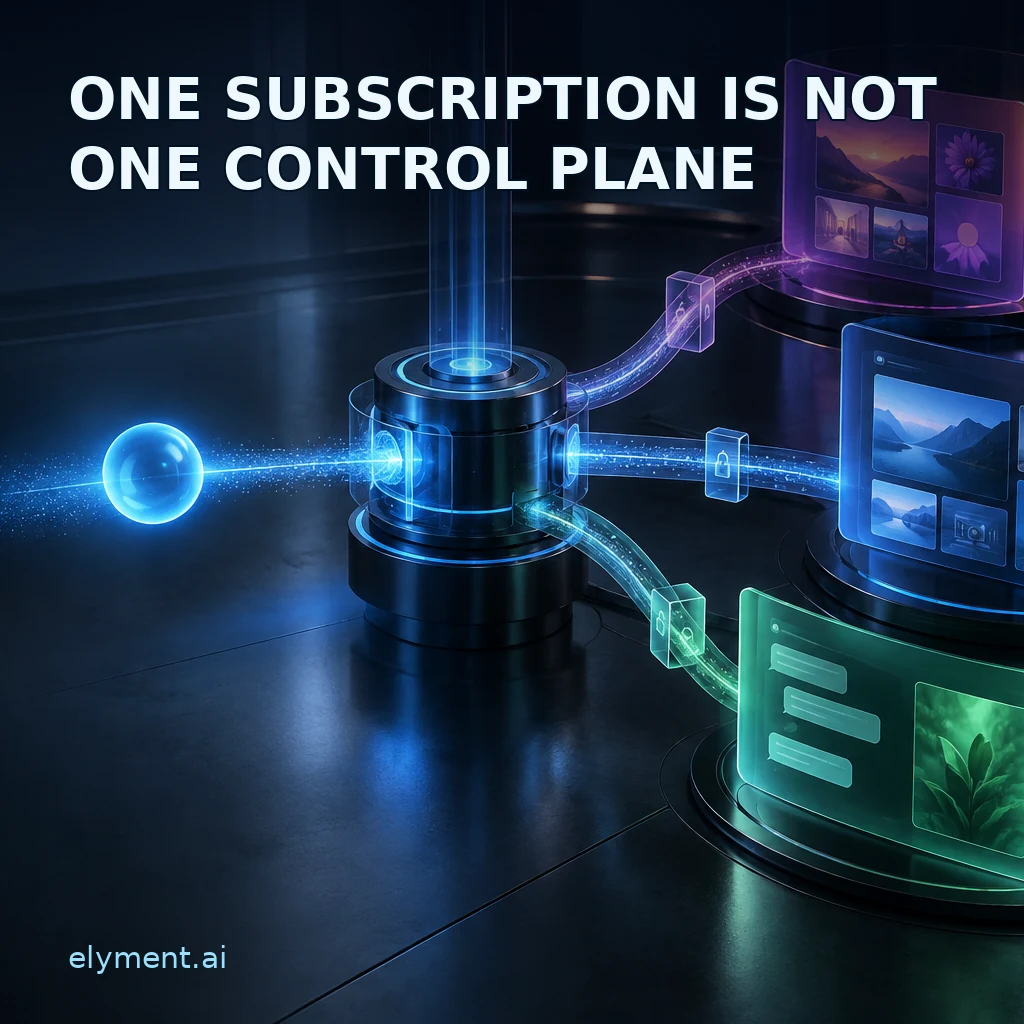
A bundle does not erase product boundaries
Instagram, Facebook and WhatsApp remain distinct products with different identities, content models and customer interactions. A payment relationship that covers all three does not by itself prove that permissions, records, retention settings or recovery paths are managed as one system.
That distinction matters because Meta One combines several kinds of value: access to individual app features, expanded generative AI usage, growth tools and agent capacity. Each can have a different owner and risk profile. Marketing may control publishing, customer service may use WhatsApp, finance may approve the subscription and an agency may hold day-to-day access. Without an explicit operating model, a simpler invoice can mask fragmented authority.
Verify five controls before consolidating work
Treat the subscription screen as the start of due diligence, not the control record. Ask for evidence that can be tested in the accounts your team will actually use:
- Entitlements: map every paid feature, usage allowance and regional exception to the exact app, account and tier.
- Identity: confirm the legal owner, administrators, role boundaries, recovery method and offboarding path for employees and agencies.
- Data: document what customer content, prompts, generated media, analytics and agent transcripts are retained, exported or shared across surfaces.
- Automation: define which Business Agent actions are allowed, where human approval is required and how every consequential action is logged.
- Continuity: test downgrade, cancellation and account-loss scenarios, including export formats, replacement workflows and the time needed to recover.
Buy measurable value, not bundled ambiguity
A sensible pilot should begin with one bounded workflow, such as scheduling approved content or handling low-risk customer enquiries. Establish baseline labour, response time, conversion and error measures before enabling the paid features. Track AI usage separately from visibility or verification benefits so renewal decisions are based on observable value.
Teams should also reuse proven controls: put consequential agent actions behind an approval workflow, verify retention rather than relying on a tier name, and maintain a practical vendor exit exercise. Those controls matter whether the capability arrives as a standalone AI product or inside a familiar social platform.
ELYMENT AI helps operators turn bundles like Meta One into governed workflows with clear ownership, approvals and evidence. The goal is not to reject integrated tools. It is to ensure that commercial convenience does not become operational ambiguity.
Sources
- Meta, Introducing Meta One (15 September 2026) - Primary announcement covering plans, pricing, features, rollout and the company’s stated subscription and trial count.
- Reuters, Meta launches subscriptions with enhanced AI features (15 September 2026) - Independent reporting on the launch, pricing, feature scope and Meta’s revenue-diversification context.
- The Verge, Meta’s new One subscriptions put a price on social media and AI (15 September 2026) - Independent breakdown of individual, creator and business tiers and their cross-app features.
Continue learning
Frequently asked questions
What is Meta One?
Meta One is Meta’s subscription service combining paid features and expanded AI usage across Instagram, Facebook, WhatsApp and Meta AI, with separate plans for individuals, creators and businesses.
How much does Meta One cost for businesses?
Meta announced creator and business plans starting at US$14.99 a month, with higher tiers from US$49.99, US$149 and US$499. Pricing, benefits and availability can vary by region, app and account.
What should a business verify before subscribing?
Verify feature entitlements, account ownership, administrator and agency access, data and retention boundaries, agent permissions and logs, usage limits, export options and downgrade or cancellation recovery.