News analysis · Published
JERA's Chiba AI Infrastructure: Buy Capacity as a System
By the ELYMENT AI editorial team · Free to read
JERA, Dell Technologies and RHAELM signed a memorandum on 1 October 2026 to develop a repeatable model for AI infrastructure in Japan, starting with a planned data-centre project of up to 400 MW at JERA's Chiba thermal power station. For buyers, the important change is procurement scope: power, cooling, facilities, rack-scale compute, financing and operations are being designed as one delivery system. Capacity should therefore be accepted against an end-to-end service record, not a rack count or power reservation alone.
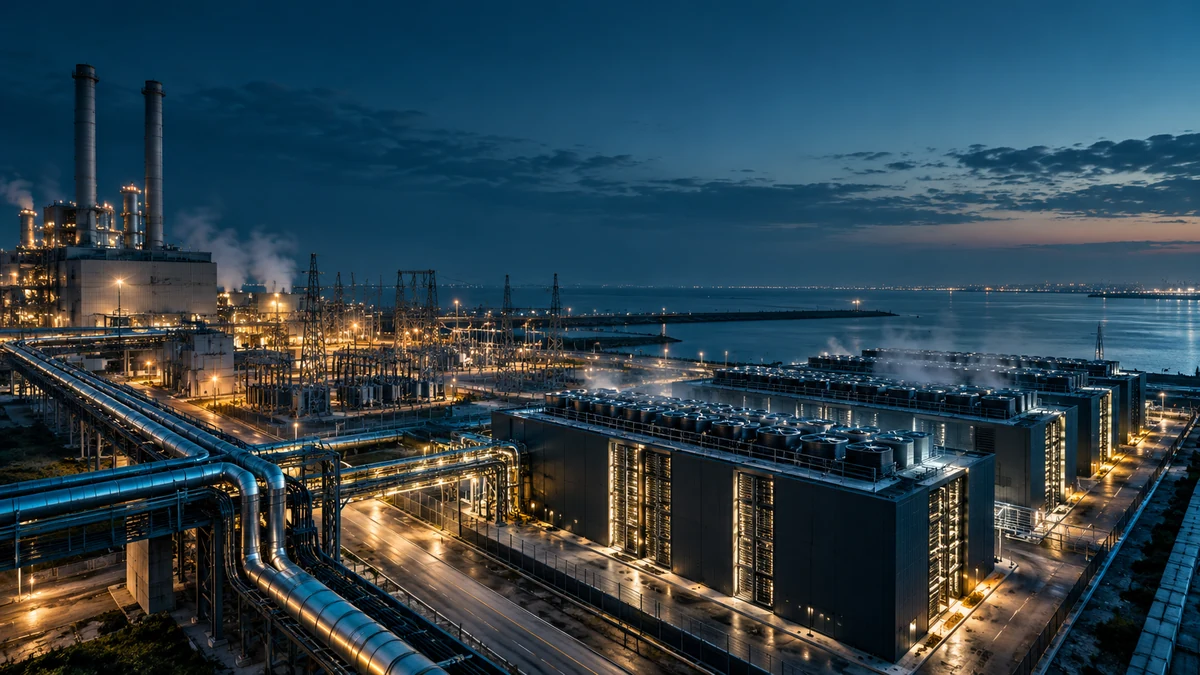
What the Chiba plan changes
JERA says the partners intend to standardise the integration of power generation, electrical infrastructure, cooling and AI compute. The Chiba project is planned as the first test of that model, using land beside an operating power station and a behind-the-meter connection. JERA describes capacity of up to 400 MW, total capital deployment above US$15 billion across all phases and a target to begin operations around 2028.
The announcement is a memorandum and development plan, not completed capacity. Apollo intends to act as RHAELM's strategic investment and financing partner, RHAELM is to lead development and delivery, Dell is to provide standardised rack-scale infrastructure, and JERA is to provide the site and energy platform. Those roles are material because the business service depends on several owners delivering in sequence.
AI capacity is an integrated dependency
A conventional compute order can hide the systems around it. High-density AI workloads depend on electrical capacity, cooling, network paths, storage, commissioning, software compatibility and operating support. Co-locating generation and compute may shorten the path to power, but it does not remove fuel, maintenance, emissions, connectivity or concentration risk.
Japan's Ministry of Economy, Trade and Industry describes this wider problem as watt-bit collaboration: electricity and telecommunications infrastructure must be planned together as AI and data-centre demand grows. That policy context supports the integrated model, while also making clear that site selection and workload placement are energy and network decisions, not only IT decisions.
Build a five-part capacity acceptance record
Before reserving AI capacity, require one record that follows the service from contracted inputs to usable workload output. It should make cross-party dependencies visible before they become schedule or performance disputes.
- Workload and service: define models, data locality, throughput, latency, availability and the business owner of the capacity.
- Energy and cooling: record firm power, backup, thermal limits, maintenance windows, metering and carbon-accounting method.
- Compute and data plane: specify rack configuration, networking, storage, software, security boundaries and portability tests.
- Commercial chain: map financing, construction, hardware, energy and operating obligations, including delay and change remedies.
- Commissioning and recovery: set staged acceptance tests, failure evidence, capacity ramp, rollback, workload transfer and exit rights.
What business leaders should do now
Translate expected AI demand into workload classes before speaking to infrastructure suppliers. Separate experiments, steady inference, burst demand and training because they need different capacity, network and resilience terms. Then test one representative workload across the proposed stack and price the controls, data movement and recovery path alongside compute.
The Chiba model matters because it makes the physical dependencies of AI visible. Its success will depend on delivery, not the memorandum alone. ELYMENT AI can help organisations connect AI capacity decisions to measurable workloads, accountable suppliers and acceptance evidence before long-term commitments are signed.
Sources
- JERA: MoU for national-scale AI infrastructure in Japan (1 October 2026) - First-party announcement covering the integrated delivery model, planned Chiba site, partner roles, up to 400 MW of capacity, capital estimate and target operating date.
- Reuters: JERA, Dell and RHAELM plan AI infrastructure in Japan (1 October 2026) - Independent reporting on the memorandum, partner responsibilities, behind-the-meter location, financing plan and intended national expansion.
- METI: Report 1.0 on Watt-Bit Collaboration (12 June 2025) - Official Japanese policy context for coordinating electricity and telecommunications infrastructure as data-centre demand grows.
- Dell Technologies: How storage powers AI factories (11 March 2026) - First-party explanation of the compute, networking, storage, thermal and data dependencies inside Dell's AI Factory approach.
Continue learning
Related analysis
- Lambda’s Oklahoma AI Data Centre: Put Community Costs in the Contract
Lambda plans an Oklahoma AI data centre under new ratepayer protections. Learn which power, water and community obligations buyers should verify.
- Stargate UAE Rethink: Why AI Capacity Needs Failure Domains
The reported Stargate UAE redesign shows why AI data-centre strategy needs distributed failure domains, tested recovery and resilient supplier contracts.
- Firmus and OpenAI's Malaysia Deal: Map the AI Workload Boundary
Firmus will supply OpenAI from two Malaysian AI factories. Learn what buyers should map across data, control, operations, evidence and exit.
Frequently asked questions
What is the JERA Chiba AI data-centre project?
It is a planned AI infrastructure development beside JERA's Chiba thermal power station, intended to test a repeatable model integrating power, cooling, facilities and Dell rack-scale compute.
Is the 400 MW Chiba AI site already operating?
No. The partners announced a memorandum and development plan on 1 October 2026, with operations targeted to begin around 2028.
What should a business verify before buying AI capacity?
Verify workload fit, power and cooling, compute and data-plane performance, cross-supplier obligations, commissioning evidence, recovery and exit rights as one system.